
Approach
Policy Co-Design
Make Public Policy With the Public
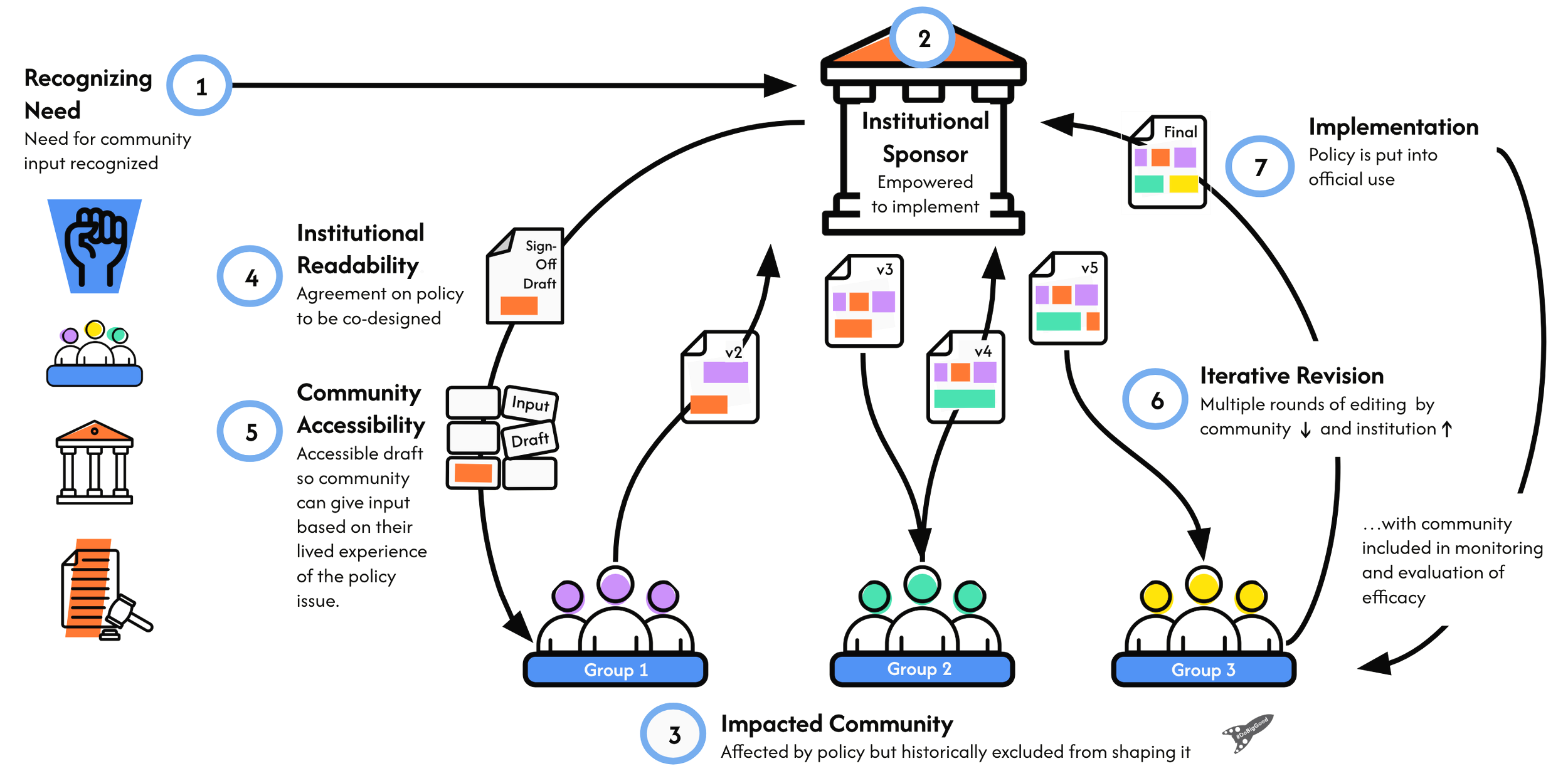
Policy co-design is Do Big Good’s process for institutions and their communities to democratically co-write governing texts.
Services
Policy Co-Design Projects
See our free guide, Policy Co-Design Basics, to learn more about the process.
1) Project Design
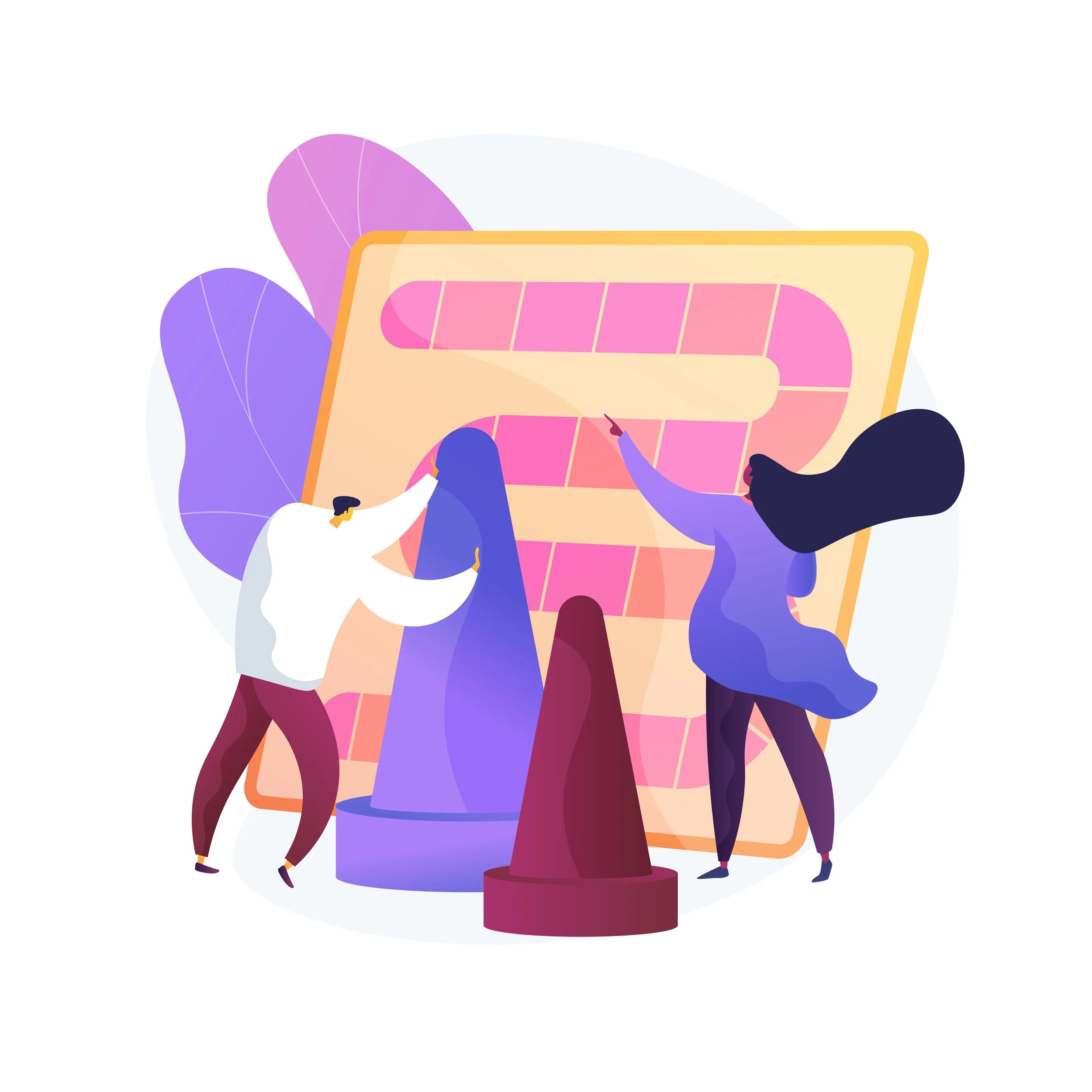
We develop clearly-structured timelines of community and institutional consultations to co-design fair and effective policy. We have policy expertise in health, education, and tech (reports below) and are always looking to delve into new fields, learning from the lived experience of communities.

3) Community consultation
We skillfully facilitate virtual and in-person workshops, listening sessions, and deliberations to collect community input. Our sessions are not focus groups. They are venues for collaborative policy co-writing between community and institution. In co-governance, power is shared.
2) Community Outreach
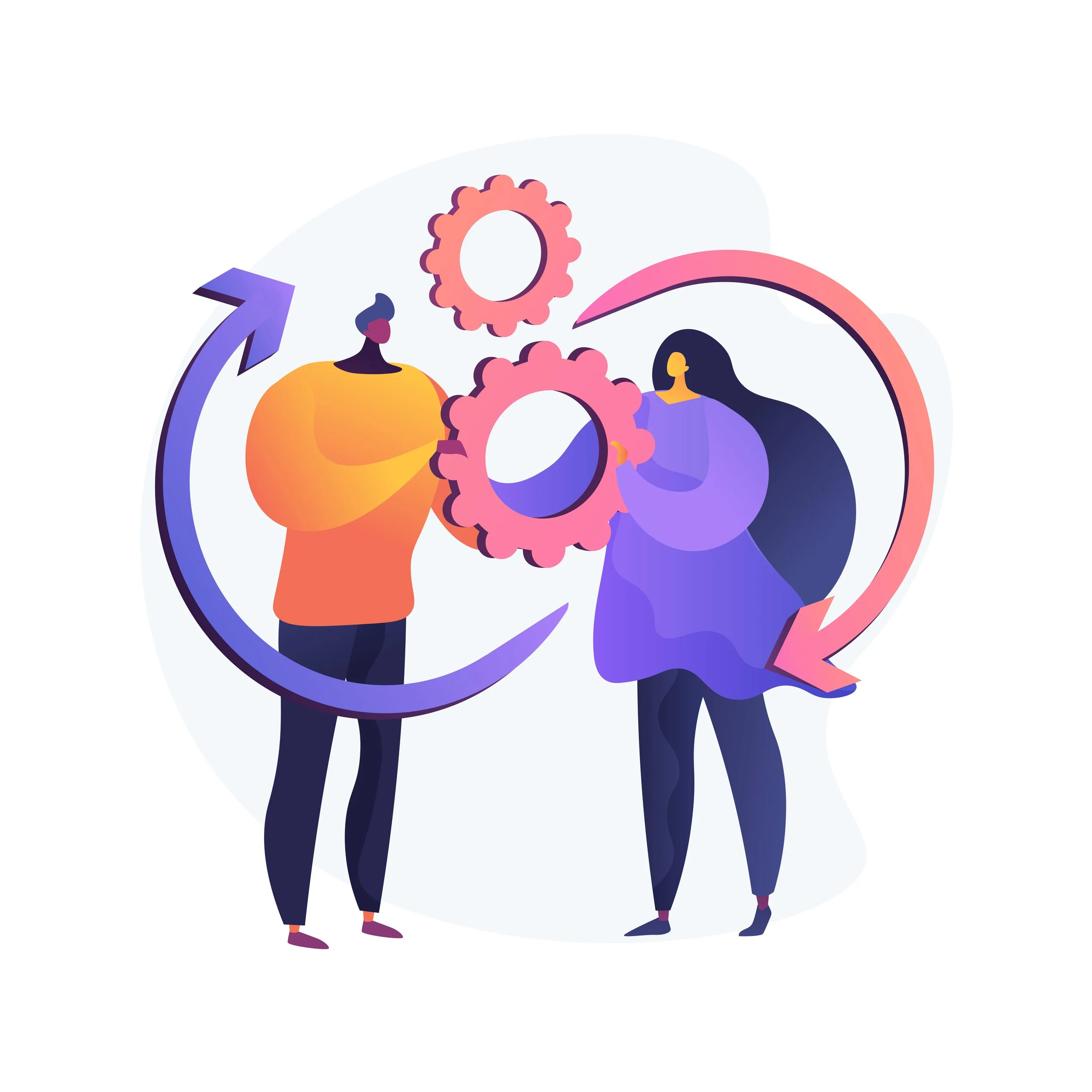
Co-governance values and relies on existing community infrastructure. We conduct ethical engagement by working in compensated collaboration with organizations already in impacted communities, bringing diverse voices to the process in a way that is respectful, empowering, and trauma-informed.

4) Policy Delivery
Unlike civic assemblies, our projects do not generate lists of recommendations and proposals still miles away from practical application. Instead, we use policy co-design to synthesize community and institutional input into governing documents the institutions can implement directly.
Training, Governance Facilitation, and Election Management



1) Training
To expand co-governance capacity, we provide virtual and in-person training on how to use co-design for inclusive public decision-making. You can view decks from past trainings further down on this page.
2) Facilitation
To support ongoing co-governance, we also design and facilitate virtual and in-person group events, such as board meetings and annual general meetings. We moderate these governance events with an eye to fairness and efficacy, so collective goals are achieved.
3) Elections
In addition to our core co-governance work, we also design and manage organizational elections, including the creation and distribution of e-ballots, communication with eligible voters, and tabulation and distribution of results.
In delivering all services we:
Center marginalized and excluded voices
Value the wisdom of lived experience
Embody democratic and anti-oppressive values that are feminist, anti-racist, and decolonalizing
Co-create equitable power dynamics
Are trauma-informed and culturally humble
Work virtually and in-person
Featured Projects
Below are reports, slide decks, workshop photos, and other work products for three client projects:
REIMAGINING ACCESS co-designed statewide health policy with young people impacted by substance use and their communities for the WA Health Care Authority (2022).
OPEN SOURCE AI DEFINITION co-designed an international tech standard with global communities in open source artificial intelligence for the Open Source Initiative (2023 - 2024).
SUPPORTING SURVIVORS co-designed statewide education policy with public school students for the WA Office of Superintendent of Public Instruction (2022 - 2023).
Reimagining Access
Policy Challenge: How can treatment for substance use disorders be more accessible to youth?

Final report for Reimagining Access, a 2022 project with the Washington State Health Care Authority to rethink access to substance use treatment with directly-impacted young people and their communities.
2. Open Source AI Definition
Policy Challenge: How should open source artificial intelligence be defined as an international standard?

The Open Source AI Definition is a project with the Open Source Initiative. The project’s aim is to collaboratively define what open source will mean for artificial intelligence. The deck above gives an update on the definitional co-design process in early spring of 2024.
One-minute video summarizing how Do Big Good is co-designing open source AI policy for this project. (source: Open.Intel)


Click on the press logos above to read news coverage of the open source AI project.

Photos from two 2023 co-design workshops for the Open Source AI Definition project.

Public report of recommendations from working groups analyzing four AI systems. Group members voted on which components should be required for an AI system to be licensed as open.

Co-designed policy paper (January, 2025)
One-hour webinar on the Open Source AI Definition (OSAID) and the co-design process that created it, including audience Q&A. (source: Open Source Community Africa)

Vote tallies spreadsheet from the working groups. It was made public in the interests of transparency and audibility, which are crucial in building trust around co-design processes.
3. Supporting Survivors
Policy Challenge: How can public schools better support student survivors of sexual assault?

Summary report (above) and supporting deliverables (below) for Supporting Survivors, a 2022-2023 project with the Washington State Office of Superintendent of Public Instruction to develop recommendations on school responses to sexual assault with student survivors and their peers. All student quotes and comments are shared pseudonymously and with consent.

Report on school mandatory reporting procedures, centering student needs.

Student quote from the summary report.

Student comments on a sexual harassment policy.

Student quote from the summary report.

Intake process for student listening sessions.
Additional Project Reports
Final reports from two youth co-design projects in the domain of public health:

Final report (click image to view) for HearMeWA, a project for the Washington State Office of the Attorney Genera. We co-designed the constitution and bylaws for this new statewide crisis hotline’s Youth Advisory Group with WA youth, ensuring the needs of young people were centered and empowered in this new program.
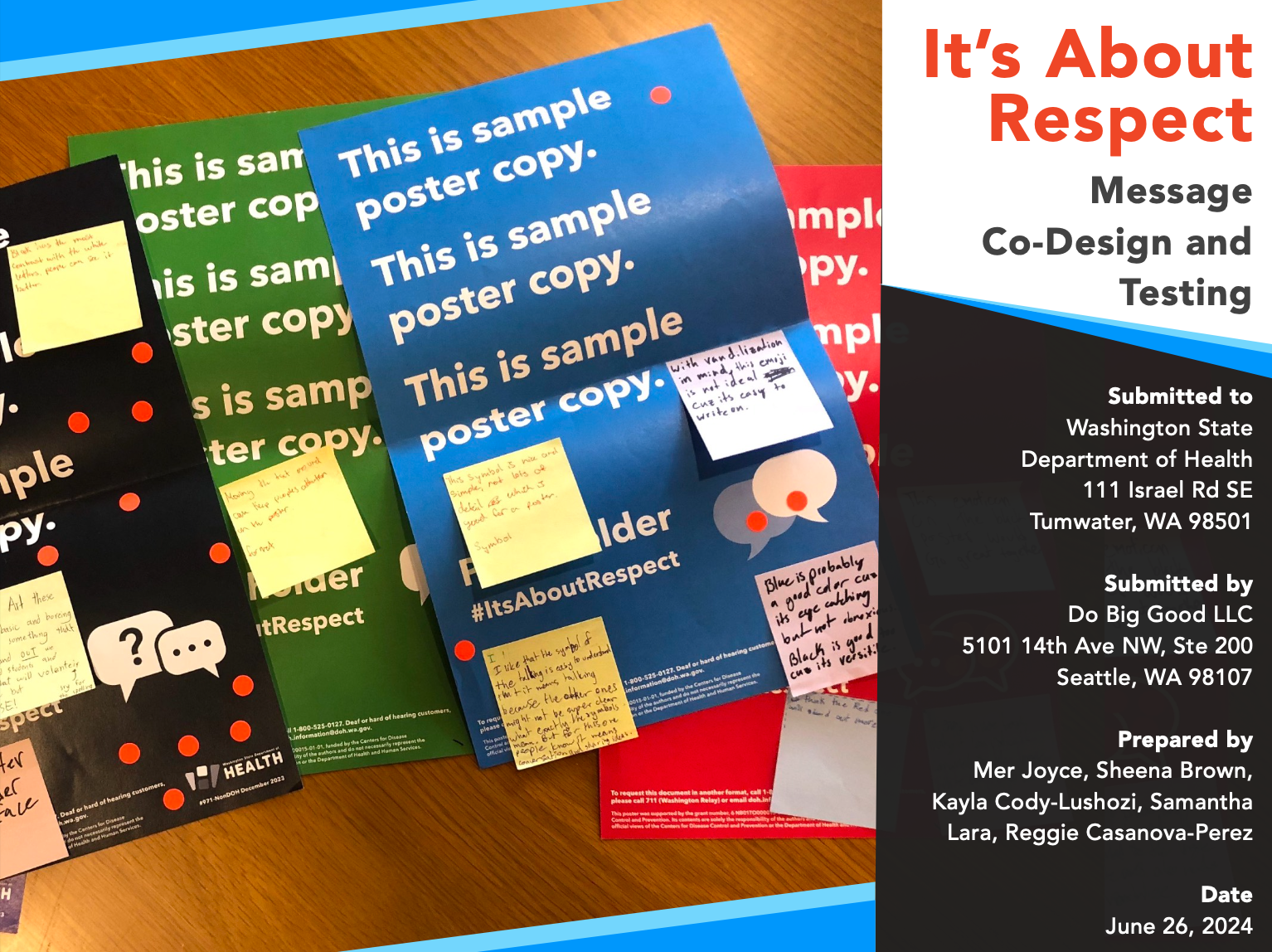
Final report (click image to view) for It’s About Respect, a project for the Washington State Department of Health. We co-designed anti-bullying posters for this behavioral health campaign with LGBTQ+ and Latine middle schoolers who are directly impacted by identity-based bullying
Trainings
Increasing Co-Governance Capacity
Do Big Good is available to train others to co-govern by using co-design for inclusive public decision-making. Below are slide decks from a range of our virtual and in-person trainings:

Slides for a virtual training for graduate student at Columbia University’s School of International and Public Affairs (SIPA)

Slides for an in-person training for New Beginnings, a Seattle nonprofit fighting domestic violence.

Slides for a virtual training for clients of Keela, a fundraising platform that services the not-for-profit sector.

Slides for a virtual training for clients of Keela, a fundraising platform that services the not-for-profit sector.

Slides for an in-person training for business students at the University of Washington’s Buerk Center for Entrepreneurship.

Slides for a virtual training for employees of Outreach.io, a sales software company that serves the for-profit sector.
Case Studies
Projects in Brief

WAshington STATE HEALTH CARE AUTHORITY
The Washington State Health Care Authority (HCA) is the state's largest health care purchaser. They hired Do Big Good in 2022 to help close the gap in youth substance use treatment. To jump-start this systems change, Do Big Good conducted listening sessions virtually and in-person, reimagining treatment with youth across the state who have substance disorders and with their adult allies.

WAshington State Office of SuperIntendent of Public Instruction
The Washington State Office of Superintendent of Public Instruction (OSPI) oversees the state’s K-12 public school system. In 2022 they hired Do Big Good to develop recommendations on school responses to sexual assault with student survivors. The project required student listening sessions, adult caregiver interviews, policy review, and academic research.

SPOKANE FOOD SECURITY COALITION
Spokane Regional Health District's Food Security Coalition unites over 40 organizations strengthening the food system in Eastern Washington. In the spring of 2022, Do Big Good facilitated two virtual workshops to develop a community outreach strategy with adults impacted by food insecurity.

IMPACTA LATAM
In 2021, Do Big Good partnered with international donor National Endowment for Democracy and local Guatemalan nonprofit Red Ciudadana to launch the Impacta Latam network and facilitated the network’s first action, the co-design of a toolkit on impact measurement with Latinx activists working to strengthen democracy and governance.

Open Knowledge Foundation
The Open Knowledge Foundation (OKF) is a global nonprofit network whose mission is to create a world where all non-personal information is open and free for everyone to use, build on, and share. In 2021, they hired Do Big Good to help them co-design a measurable, participatory strategy to relaunch the organization under their new CEO.
Code for America
Code for America is a tech nonprofit that believes government can work by and the for people in the digital age. In 2019, they hired Do Big Good to co-design a new model of impact measurement with their volunteers across the country. The results in-person and virtual process, piloted by brigades across the country, resulted in the Impact Cascade model and process.

University of Michigan
University of Michigan's Center for Socially Engaged Design (C-SED) hired Do Big Good to co-design a two-part train-the-trainers workshop with their graduate facilitators in the spring of 2022. The focus was Do Big Good’s Decision Cascade, a model we developed to make power dynamics visible in design and decision-making.
Photo Gallery
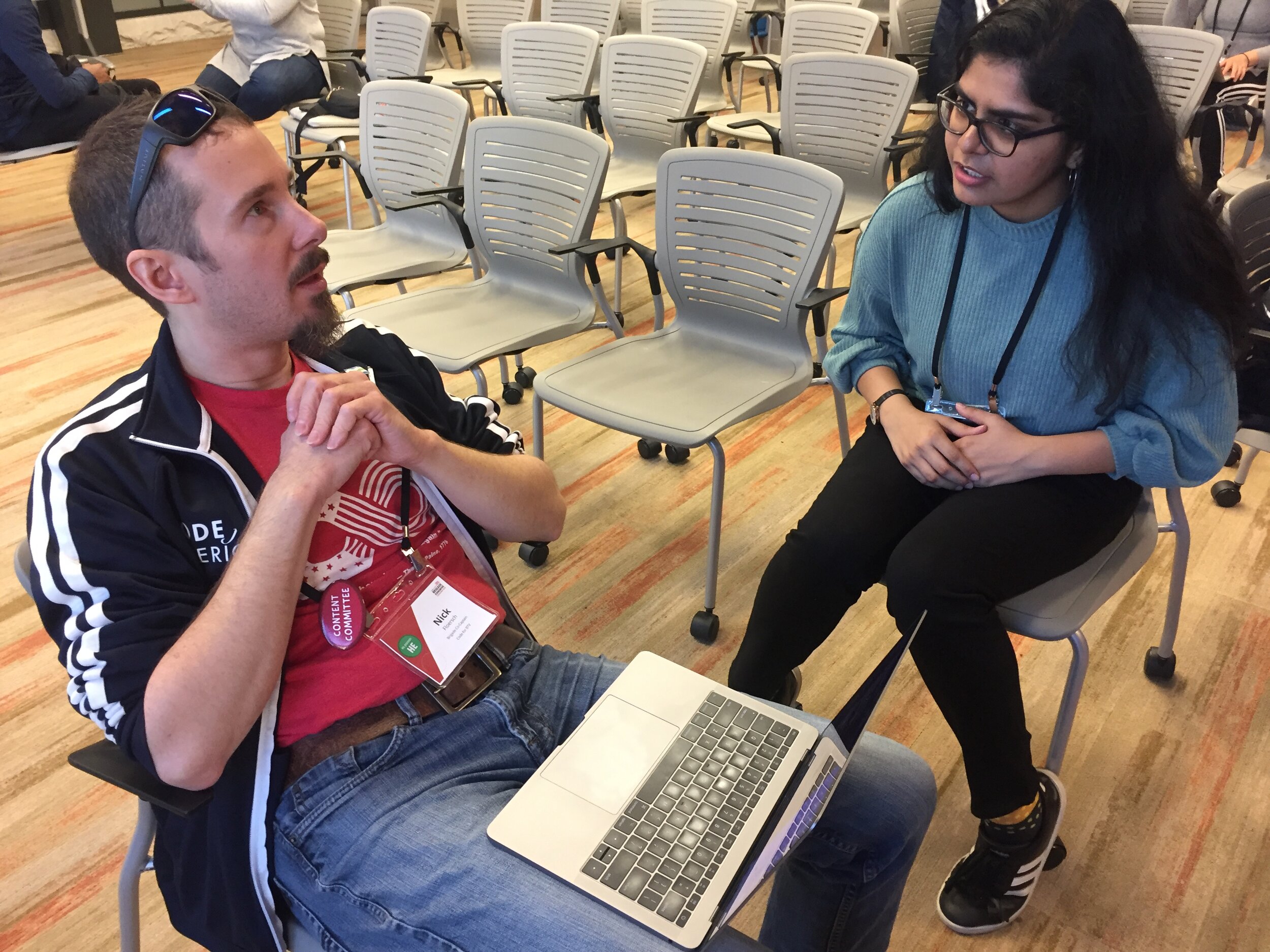
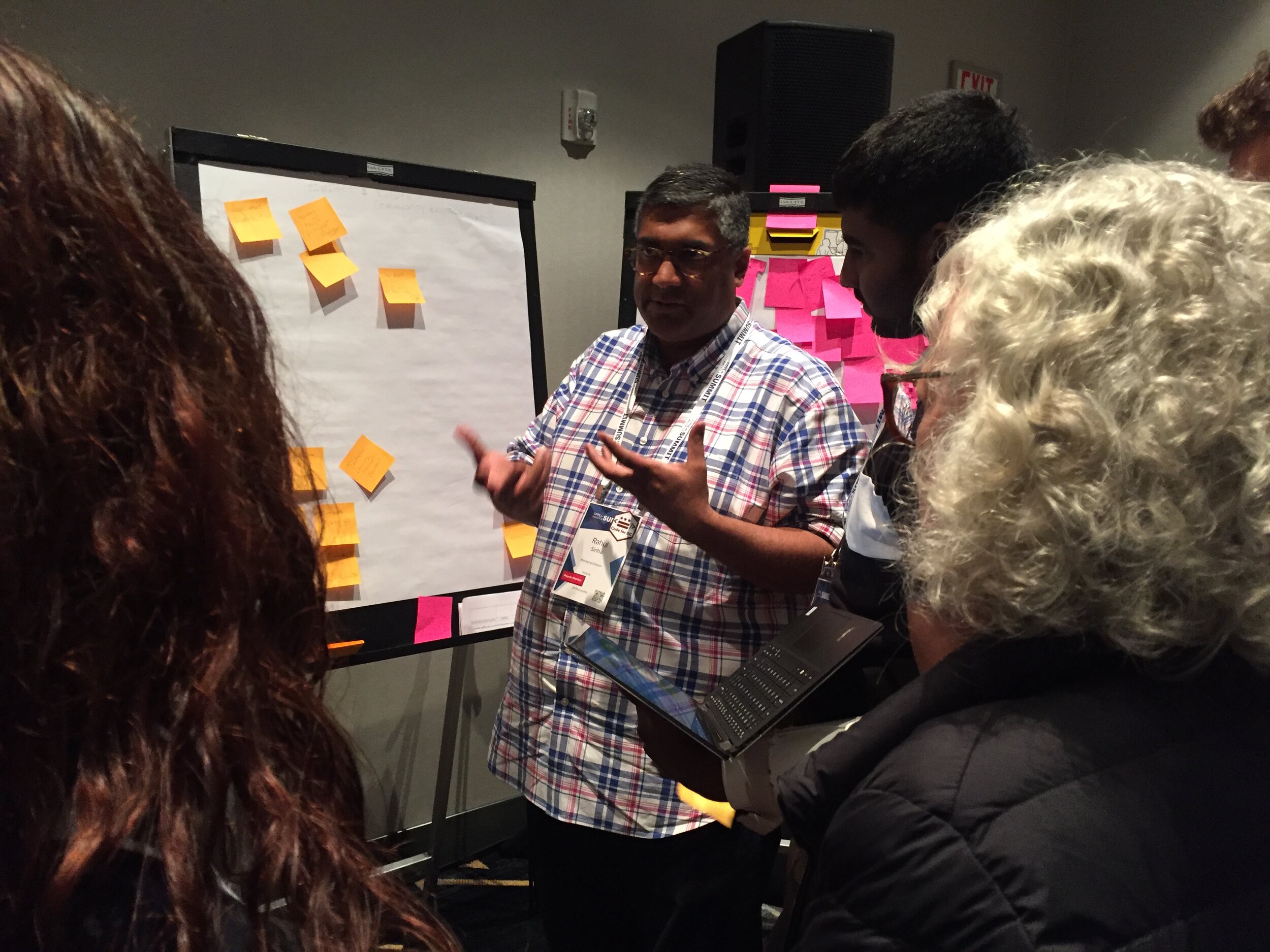
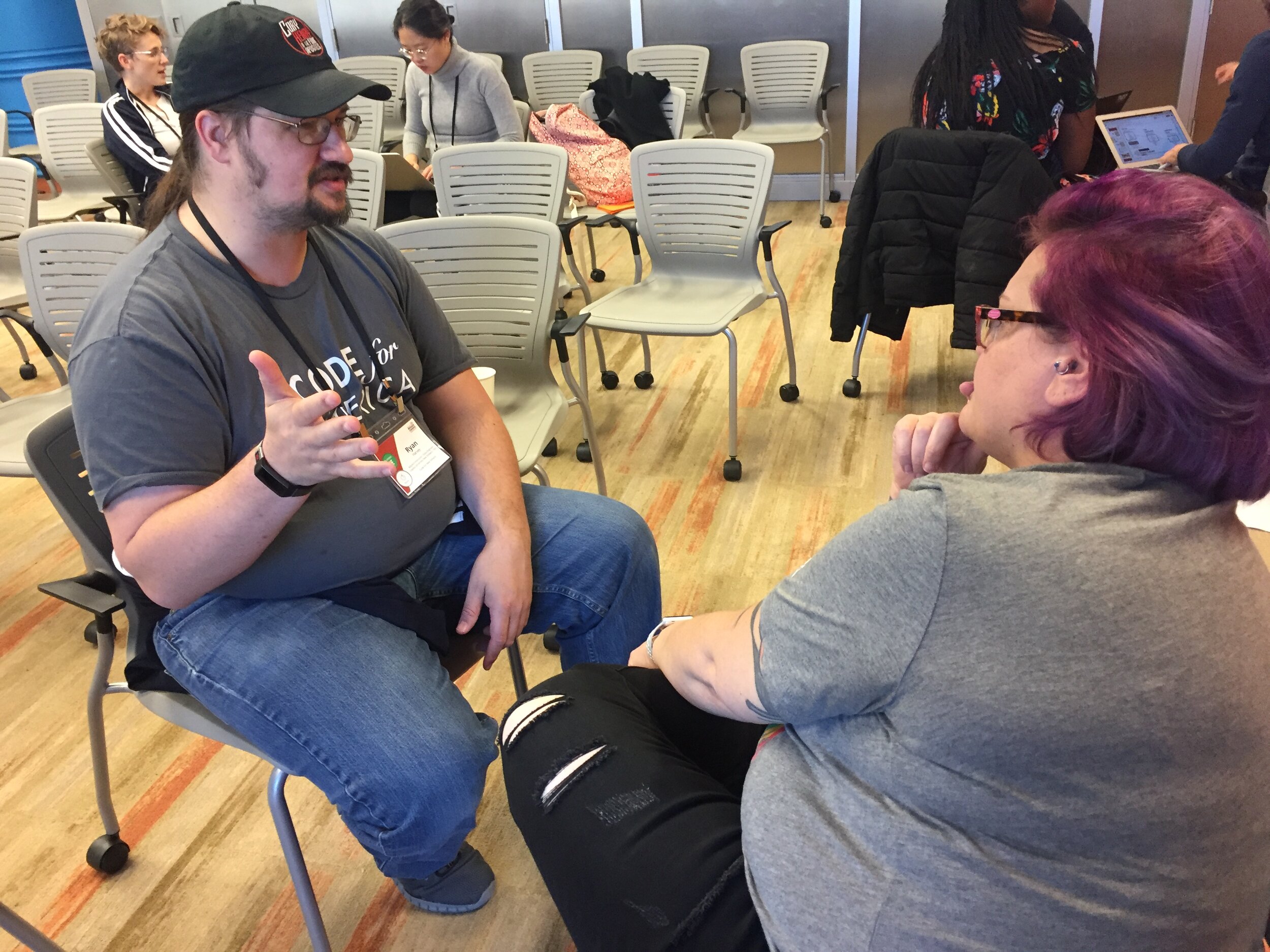
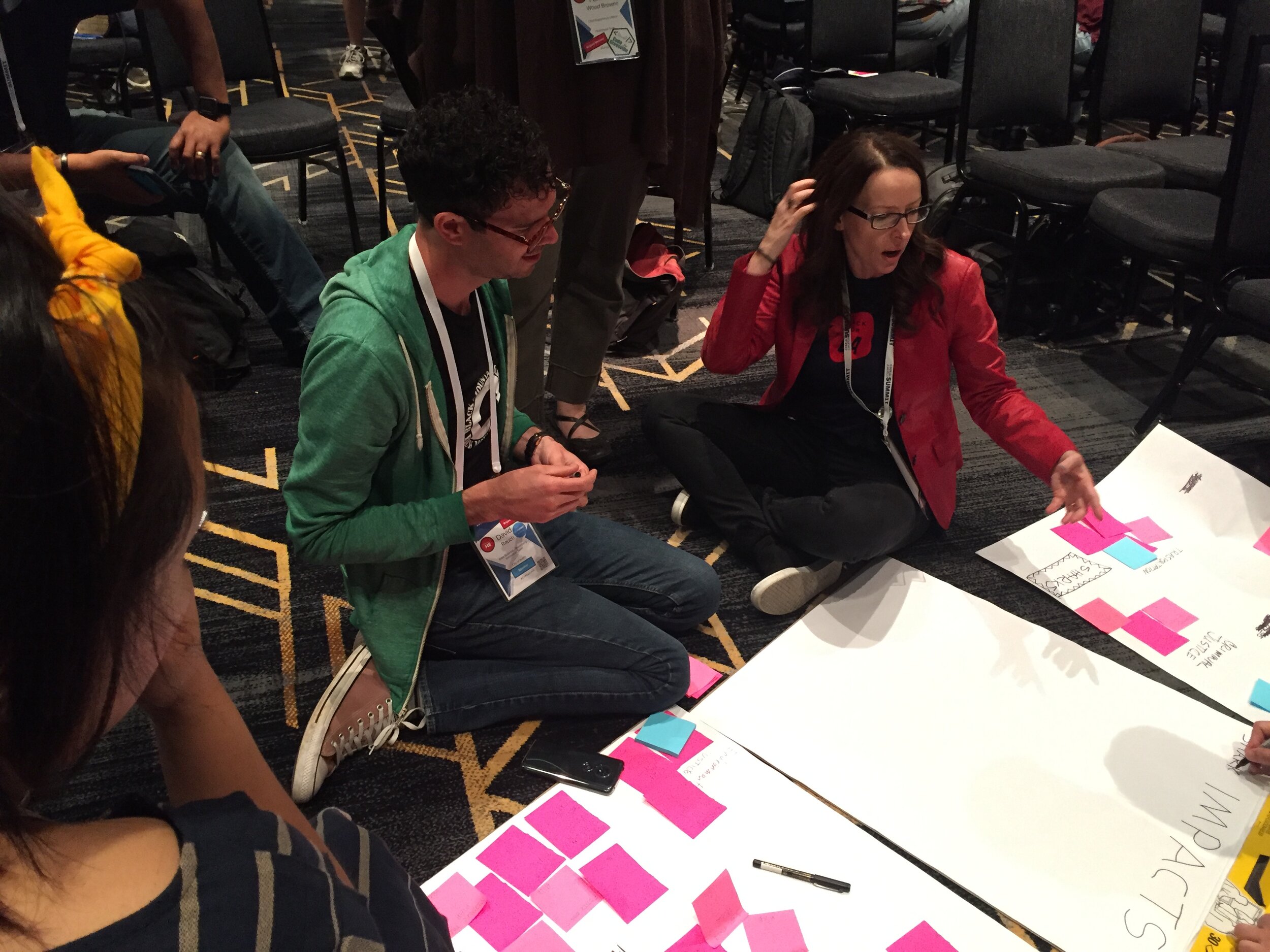
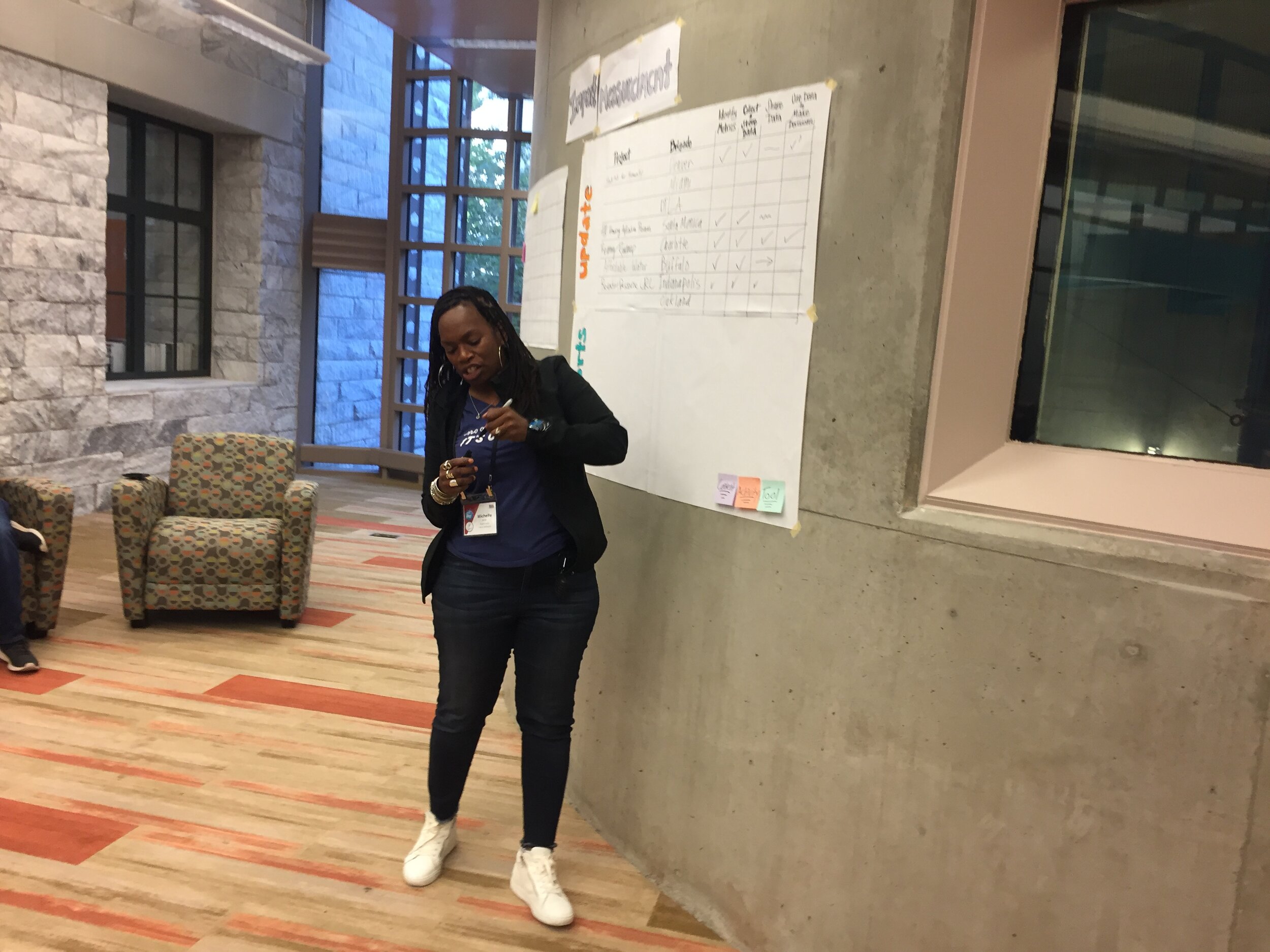
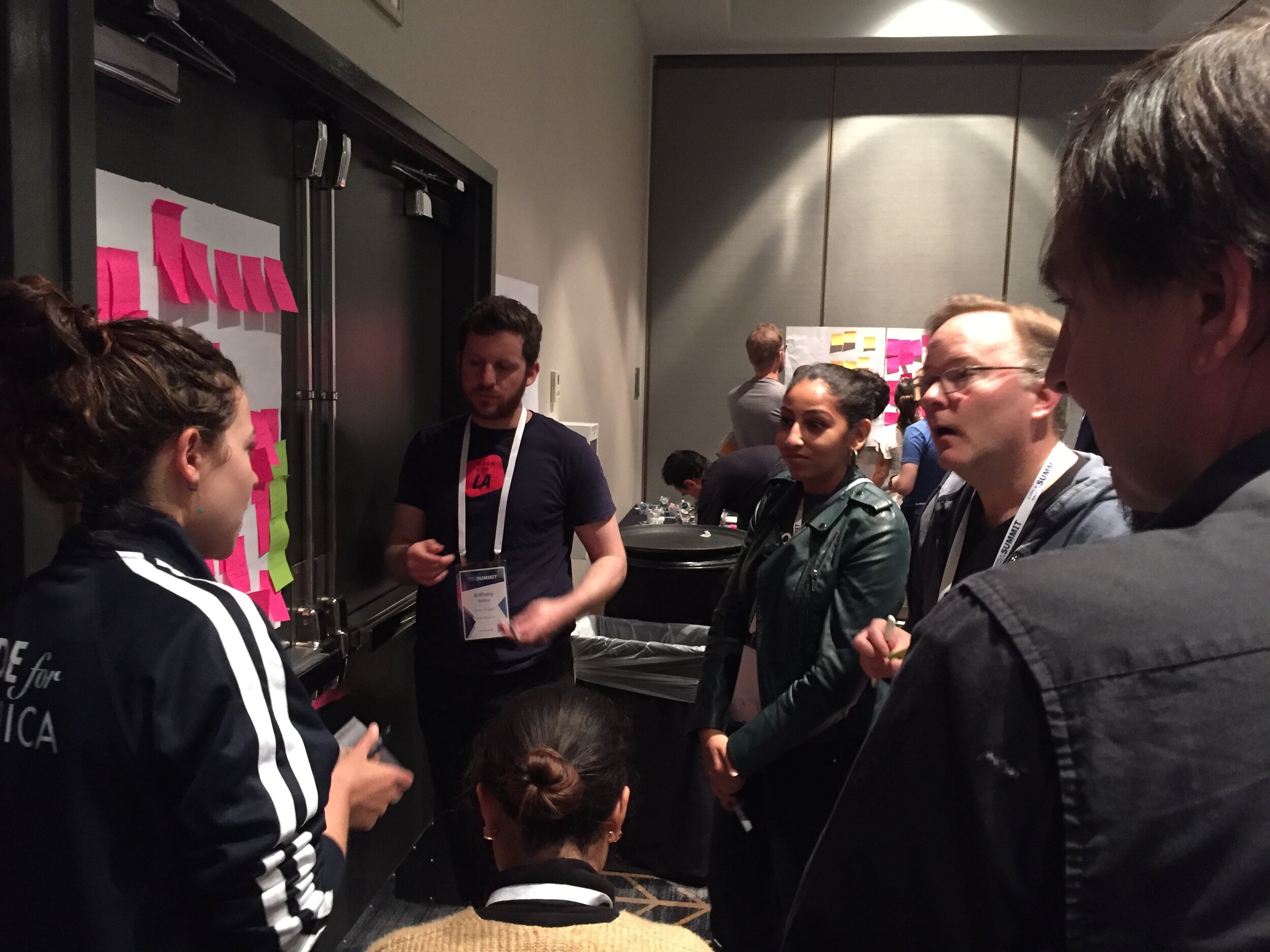
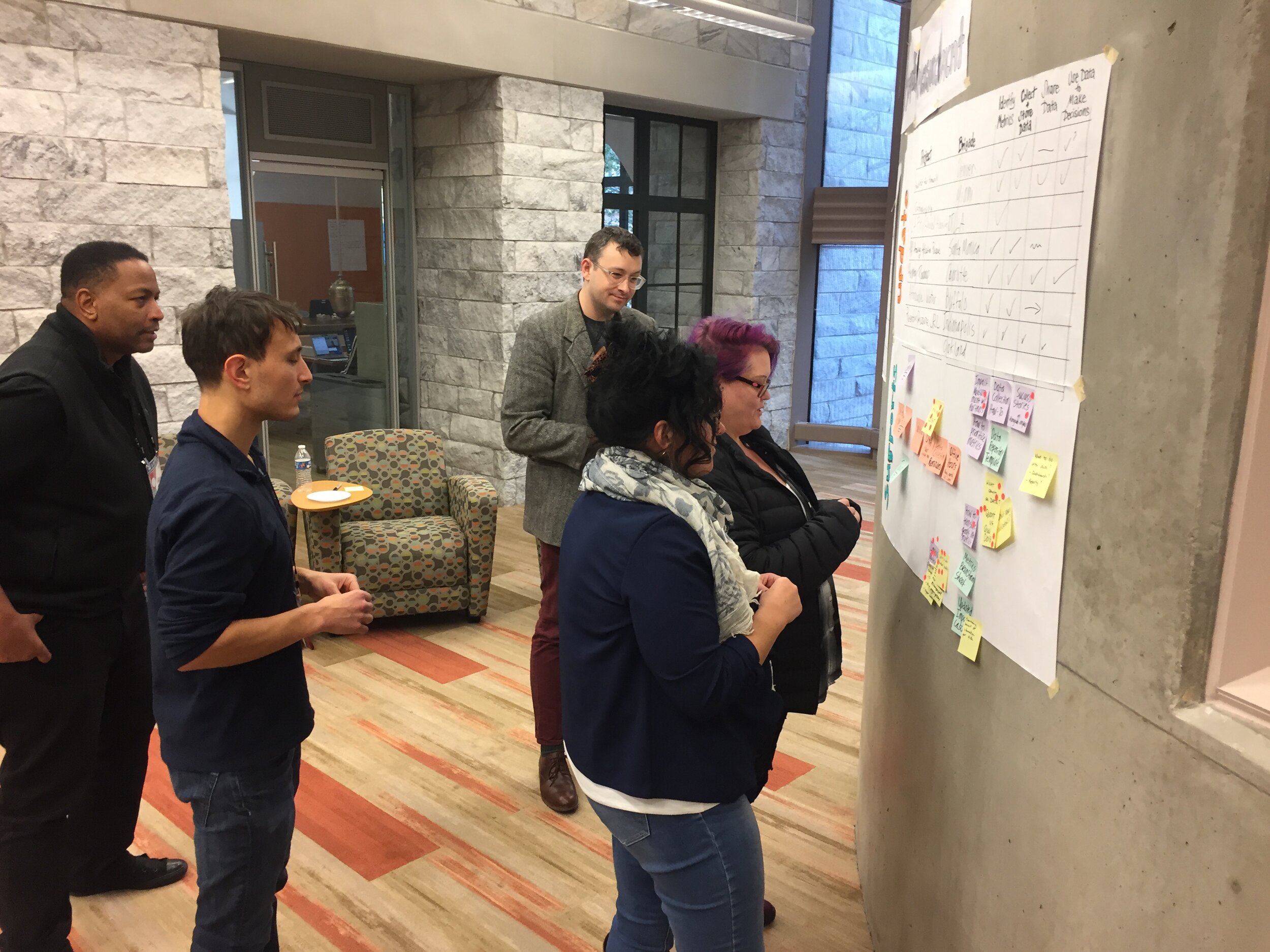
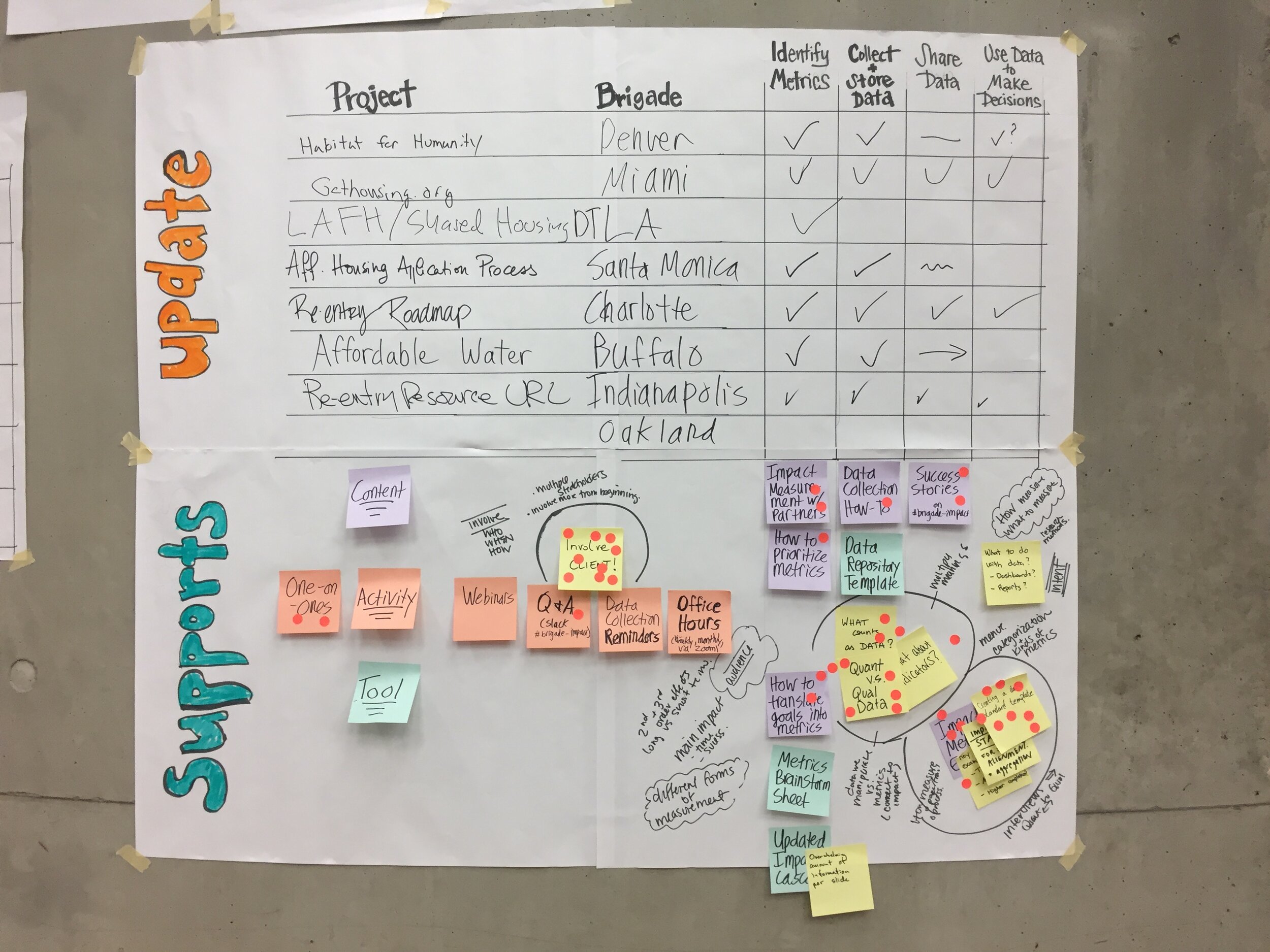
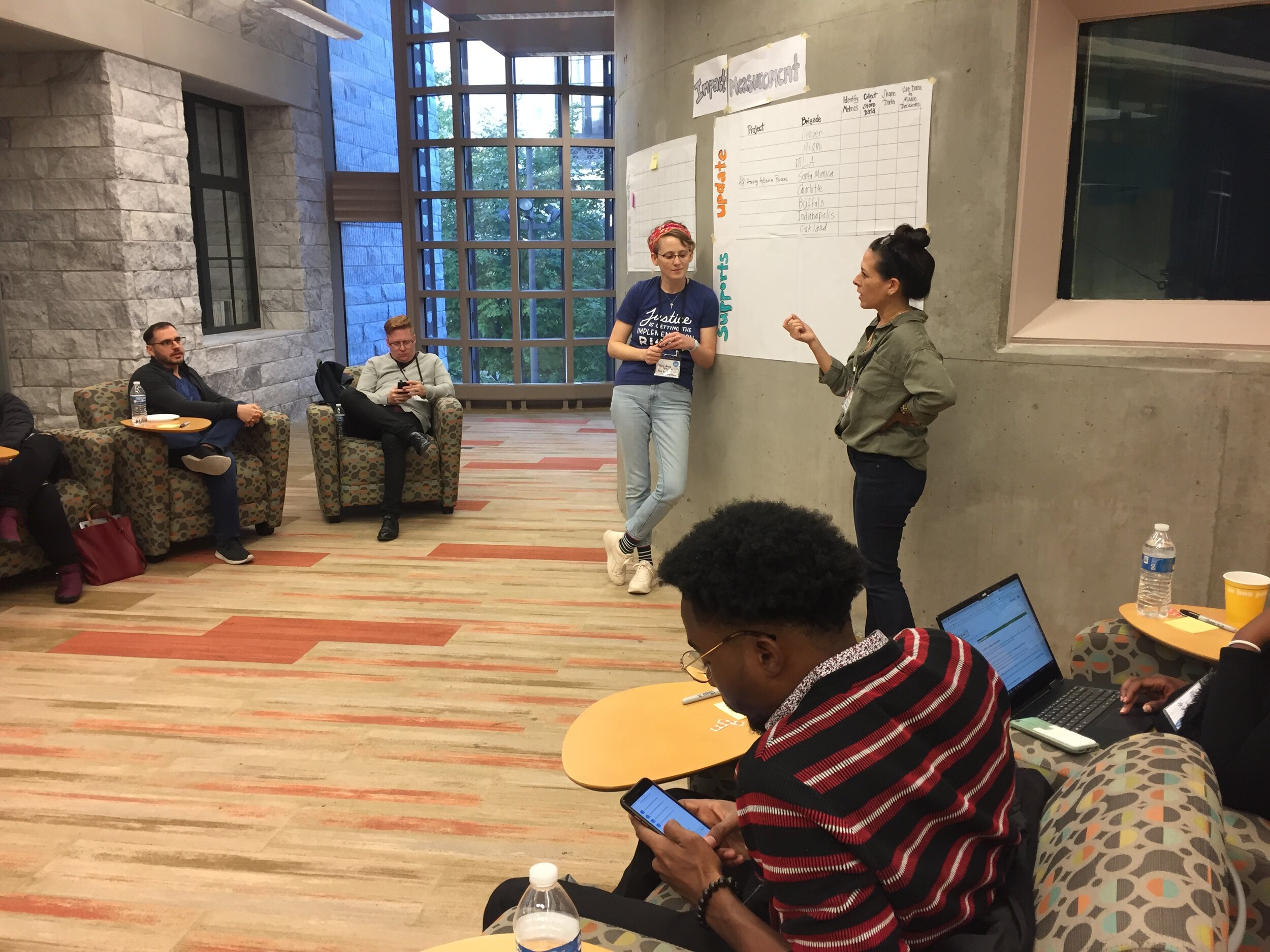
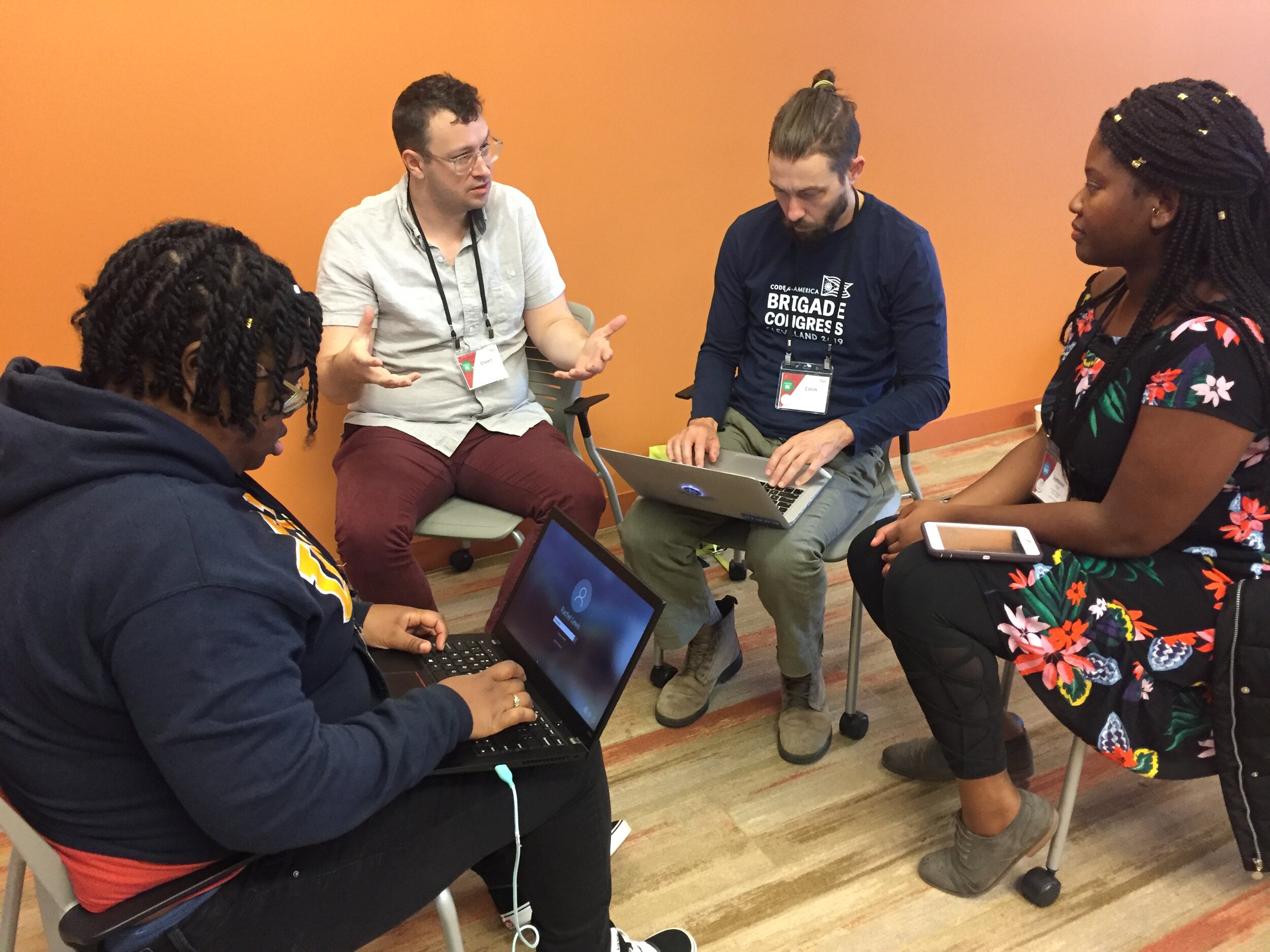
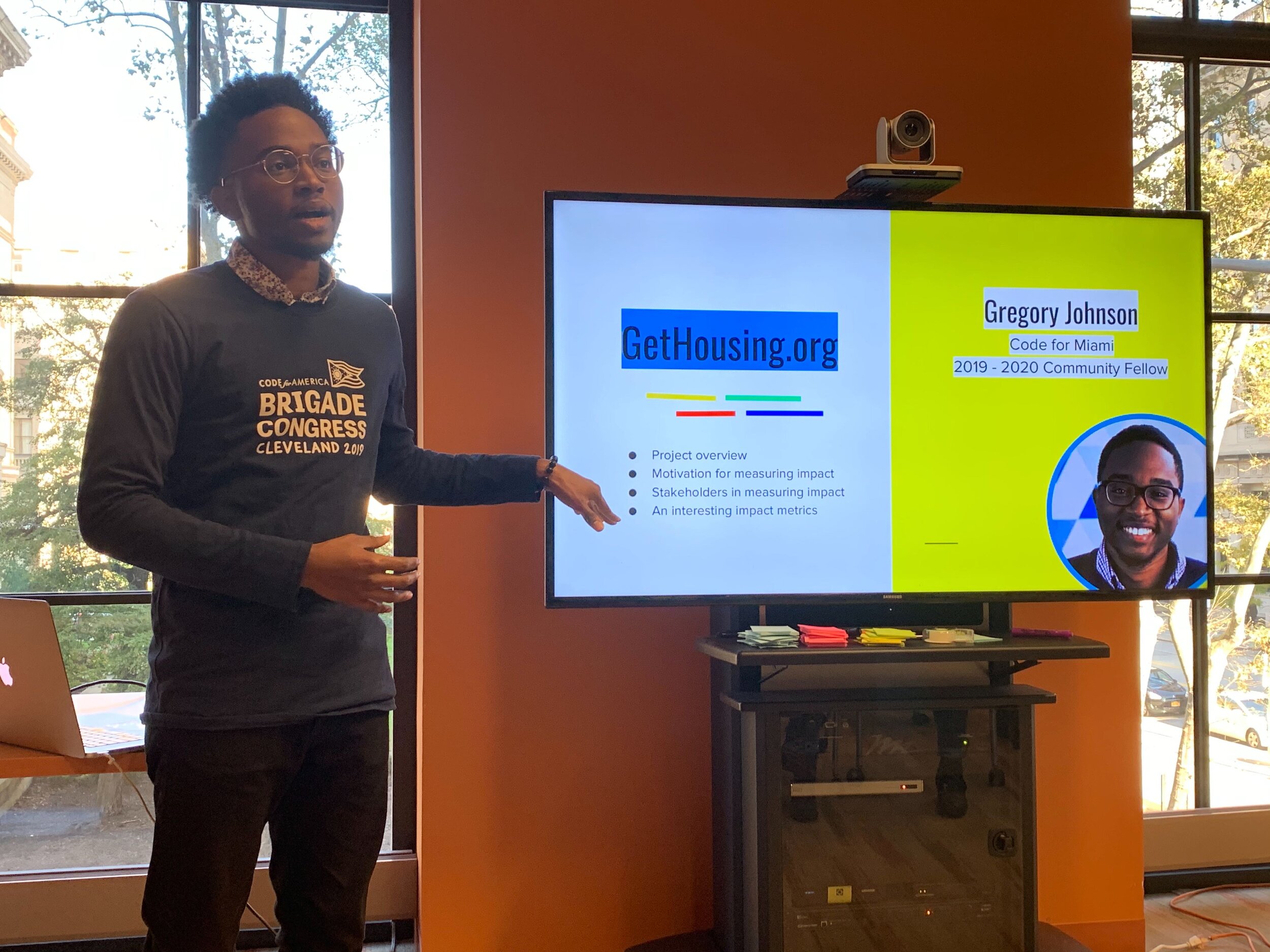
Above: co-design workshops with and for Code for America (2019)
all graphics by Vector Juice